Compliant Archiving • Hardware WORM • Made in Europe
Silent Cubes. For all data that must not be lost under any circumstances.
Silent Cubes use technology to protect your most valuable data against tampering and loss. They are ideal for audit-proof archiving and take the strain off your backup and recovery processes.
Overview • Components • Software • Partner • CARE
WORM
WORM (Write Once, Read Many) refers to a storage principle in which data is written once and can technically no longer be altered or deleted — in hardware WORM, this immutability is a physical property of the storage controller, independent of software, operating system or user privileges.
WORM
WORM (Write Once, Read Many) refers to a storage principle in which data is written once and can technically no longer be altered or deleted — in hardware WORM, this immutability is a physical property of the storage controller, independent of software, operating system or user privileges.
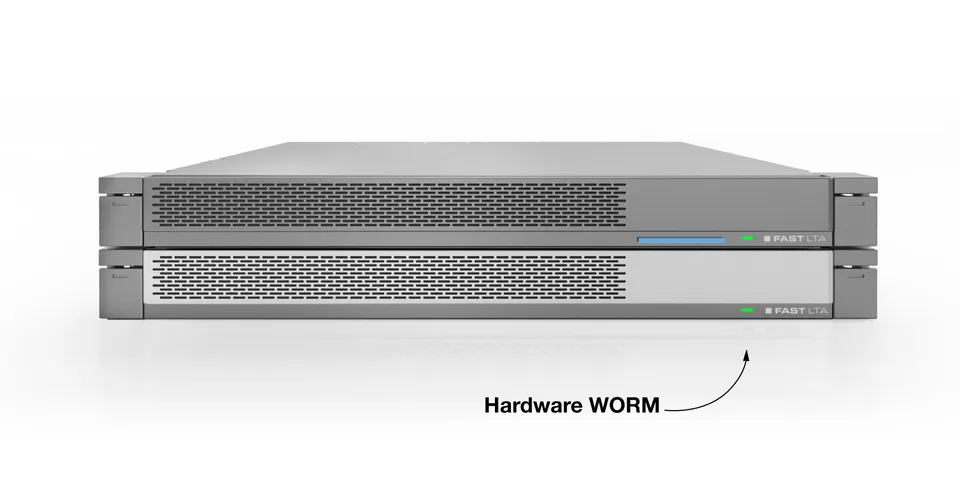
Zero Loss by Design
Designed without compromise to ensure no data is lost. Hardware sealing makes manipulation and deletion impossible.
WORM
WORM (Write Once, Read Many) refers to a storage principle in which data is written once and can technically no longer be altered or deleted — in hardware WORM, this immutability is a physical property of the storage controller, independent of software, operating system or user privileges.
Audit-proof & GDPR-compliant
Suitable for audit-proof archiving. -compliant data retention – including deletion.
GDPR
The GDPR (General Data Protection Regulation, EU 2016/679) is the European regulation for the protection of personal data — particularly relevant for IT infrastructure in Art. 5 (principles), Art. 17 (right to erasure), Art. 28 (processors) and Art. 32 (security of processing).
Modular and scalable
Start with just a few terabytes. Scale up as needed, at any time, right up to the petabyte range.
Certified for your software
Standard integration protocols, including support for legacy integrations for versioning and triggered archiving.
Managed Storage
All-inclusive CARE contract: up to 10 years of maintenance and support.
Made in Europe
Appliance from a German manufacturer. Managed with FAST LTA CARE.
Companies, public authorities and organisations rely on Silent Cubes


Applications
For over 17 years, Silent Cubes have been the standard for audit-proof archiving in German hospitals and public institutions. However, archiving is also a good way to reduce the load on your backup system.
WORM
WORM (Write Once, Read Many) refers to a storage principle in which data is written once and can technically no longer be altered or deleted — in hardware WORM, this immutability is a physical property of the storage controller, independent of software, operating system or user privileges.
System architecture. Flexible and modular.
Silent Cubes are particularly flexible and future-proof thanks to the separation of the compute and storage components. Current storage modules can be integrated into existing systems to ensure smooth, long-term operation. When replacing a head unit with a newer model, all data is retained.
Head Unit (Pro)
The head unit is the control centre of the Silent Cube storage system. It acts as an interface to and from the archiving software.
Applications
Head Unit: Small installations with a few terabytes and non-critical performance requirements
Head Unit Pro: Scalable archive systems up to the petabyte range, active s
WORM
WORM (Write Once, Read Many) refers to a storage principle in which data is written once and can technically no longer be altered or deleted — in hardware WORM, this immutability is a physical property of the storage controller, independent of software, operating system or user privileges.
WORM
WORM (Write Once, Read Many) refers to a storage principle in which data is written once and can technically no longer be altered or deleted — in hardware WORM, this immutability is a physical property of the storage controller, independent of software, operating system or user privileges.
Silent Cube DS (Pro)
Data is stored on the Silent Cube DS memory modules in an audit-proof manner and is -sealed.
Applications
From a few terabytes up to petabytes • Legally compliant archiving from DMS/ECM, PACS/HIS/RIS and other archiving systems • Active s
WORM
WORM (Write Once, Read Many) refers to a storage principle in which data is written once and can technically no longer be altered or deleted — in hardware WORM, this immutability is a physical property of the storage controller, independent of software, operating system or user privileges.
WORM
WORM (Write Once, Read Many) refers to a storage principle in which data is written once and can technically no longer be altered or deleted — in hardware WORM, this immutability is a physical property of the storage controller, independent of software, operating system or user privileges.
WORM
WORM (Write Once, Read Many) refers to a storage principle in which data is written once and can technically no longer be altered or deleted — in hardware WORM, this immutability is a physical property of the storage controller, independent of software, operating system or user privileges.
Silent Cubes Software. Connected to your archiving system.
In the archiving sector in particular, integrating storage with archiving software can be a complex process. Many systems are several years old and were originally developed exclusively for other storage technologies or systems that are no longer in use today. With a range of volume types and standard protocols, our software ensures that your archive continues to function.
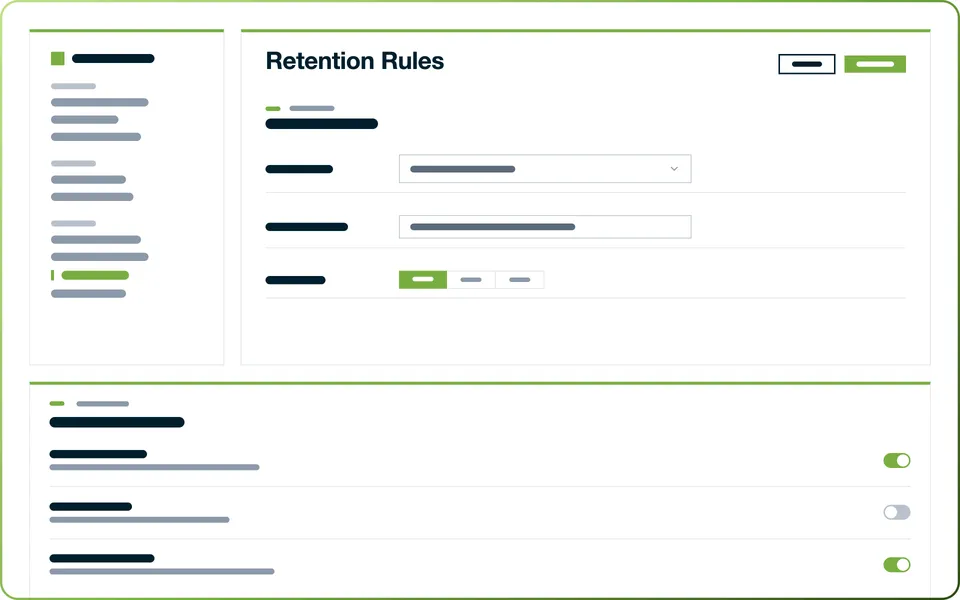
CARE. A comprehensive, hassle-free service for your storage.
We consider it our responsibility to protect your data from loss. Our storage systems are therefore designed from the outset to offer a long service life and low maintenance requirements. Should the worst come to the worst, the CARE maintenance contract provides you with comprehensive cover for up to 10 years at fixed rates. 24/7 support is also available on request.
Further reading

Questions and answers
Software stores data and then applies a software-based lock designed to prevent users from altering the data. However, this lock remains in place only as long as the software is correctly configured and no user with sufficient rights deactivates it. Hardware — as with Silent Cubes — applies write protection directly within the storage controller at the device level. This protection exists independently of the operating system, firmware, drivers or user privileges. It cannot be removed by software, by an administrator or by a ransomware attack. For auditors and inspectors, this is the crucial difference: with , immutability is a physical property, not a policy.
WORM
WORM (Write Once, Read Many) refers to a storage principle in which data is written once and can technically no longer be altered or deleted — in hardware WORM, this immutability is a physical property of the storage controller, independent of software, operating system or user privileges.
WORM
WORM (Write Once, Read Many) refers to a storage principle in which data is written once and can technically no longer be altered or deleted — in hardware WORM, this immutability is a physical property of the storage controller, independent of software, operating system or user privileges.
WORM
WORM (Write Once, Read Many) refers to a storage principle in which data is written once and can technically no longer be altered or deleted — in hardware WORM, this immutability is a physical property of the storage controller, independent of software, operating system or user privileges.
WORM
WORM (Write Once, Read Many) refers to a storage principle in which data is written once and can technically no longer be altered or deleted — in hardware WORM, this immutability is a physical property of the storage controller, independent of software, operating system or user privileges.
Yes. The requires that tax-relevant documents must be tamper-proof, complete, traceable and available for the statutory retention period of six or ten years. Silent Cubes meet these requirements through hardware-based tamper-proofing, comprehensive access logs and configurable retention periods. The German Commercial Code (HGB, Sections 238, 257) imposes comparable requirements on the retention of commercial records and business correspondence. Silent Cubes are certified and integrated as a storage platform in several -compliant DMS and archiving solutions.
GoBD
The GoBD (Principles for the Proper Management and Storage of Books, Records and Documents in Electronic Form as well as Data Access) is a German Federal Ministry of Finance letter that specifies how tax-relevant documents must be archived electronically in Germany — particularly regarding immutability, completeness and auditability.
GoBD
The GoBD (Principles for the Proper Management and Storage of Books, Records and Documents in Electronic Form as well as Data Access) is a German Federal Ministry of Finance letter that specifies how tax-relevant documents must be archived electronically in Germany — particularly regarding immutability, completeness and auditability.
Silent Cubes support configurable retention periods — ranging from the ten-year period required under the , through the 30-year retention obligation under Section 10 of the X-ray Ordinance, to individually defined periods for specific document classes. The lock remains in place for the entire configured period. Once the retention period has expired, data can be deleted in a controlled and logged manner. The storage media themselves are designed for a service life of at least 30 years.
WORM
WORM (Write Once, Read Many) refers to a storage principle in which data is written once and can technically no longer be altered or deleted — in hardware WORM, this immutability is a physical property of the storage controller, independent of software, operating system or user privileges.
GoBD
The GoBD (Principles for the Proper Management and Storage of Books, Records and Documents in Electronic Form as well as Data Access) is a German Federal Ministry of Finance letter that specifies how tax-relevant documents must be archived electronically in Germany — particularly regarding immutability, completeness and auditability.
WORM
WORM (Write Once, Read Many) refers to a storage principle in which data is written once and can technically no longer be altered or deleted — in hardware WORM, this immutability is a physical property of the storage controller, independent of software, operating system or user privileges.
Yes. In addition to the physical Silent Cube DS and Silent Cube DS Pro modules, FAST LTA offers a VMware version that can be operated in virtualised infrastructures. The archiving functions, compliance features and mechanisms are also fully available in the VMware environment. A combination of physical and virtualised Silent Cube units is possible and is used in hybrid data centre environments.
WORM
WORM (Write Once, Read Many) refers to a storage principle in which data is written once and can technically no longer be altered or deleted — in hardware WORM, this immutability is a physical property of the storage controller, independent of software, operating system or user privileges.
Once the configured retention period has expired, the system flags the data record for controlled deletion. Deletion does not take place automatically but must be actively initiated — this prevents data from being accidentally deleted prematurely. The entire process is logged and can be traced for audit purposes. This procedure complies with the requirements of the (Article 17: Right to erasure).
GDPR
The GDPR (General Data Protection Regulation, EU 2016/679) is the European regulation for the protection of personal data — particularly relevant for IT infrastructure in Art. 5 (principles), Art. 17 (right to erasure), Art. 28 (processors) and Art. 32 (security of processing).